“Music based on 432 Hz will support humanity on its way towards spiritual freedom.” – Rudolph Steiner

Cannon Street tube station, London, 1939. Photo taken just a few months before the outbreak of the Second World War. Copyrights : mikeyashworth
May 1939 in Britain was unusually dry and warm, with one of the hottest days on record. A large socialist march through central London streets drew hundreds, protesting under banners such as "Russia Today" and "Chamberlain Must Go," marking May 1st. The city was very tense, with public sentiment increasingly anxious about the impending conflict. Meanwhile, King George VI and Queen Elizabeth departed for Canada on May 17th. It was the first visit by a reigning British sovereign to the dominion. It was a month of intense debates in the Parliament, especially over Nazi Germany's threats to Poland and failed Anglo-French talks with the Soviet Union.
Amid all of this tension and uncertainty, the British Standards Institution (BSI) and the BBC managed to organize a conference with participants from five European countries and the United States. The opening speech was delivered by Sir Cecil Graves, the BBC's Director General. In his speech, he argued that standardizing pitch had both artistic and commercial advantages and was "very much bound up with the emotional factor," presenting musical standardization as a symbol of international cooperation on the eve of war, explicitly justifying broadcasters' role in "tuning the world" and linking 440 Hz to ideals of peace and global harmony.
The delegates unanimously agreed to recommend that concert pitch be standardized at A4 = 440 cycles per second (440 Hz) "within close limits," making this the first broadly international political-technical consensus around 440 Hz - a shift from 432 Hz. The 440 Hz was later formally taken over as ISO 16 (1955, reaffirmed 1975), which retroactively gives the 1939 decision its "ISO standard."
It remains a mystery how it was possible to gather delegates from France, Italy, Holland, Great Britain, the US, and Germany and have them unanimously agree on something a few months before the war.
Conspiracy theories claim Nazis pushed 440 Hz to induce anxiety and control populations, contrasting 432 Hz as "nature's frequency" aligned with chakras or cosmic vibrations. Proponents of the 432 Hz cite numerology (e.g., 432 as the sum of primes) and healing benefits, such as reduced heart rate. The standard 440 Hz tuning is slightly higher and is often described as having a brighter or more "aggressive" sound. In 432 Hz tuning, sounds are 8 Hz lower, giving the impression of a warmer, gentler, and clearer tone that is more pleasing to the ear. Its proponents emphasize that this tuning resonates more closely with the body's and the universe's natural vibrations, such as the Schumann resonance (7.83 Hz) and the heartbeat. Further on, they claim that 432 Hz releases emotional blockages, improves concentration, reduces stress, and synchronizes the brain's hemispheres, drawing on the traditions of Verdi, the ancient Greeks, and the Egyptians. History points to the use of this tuning in Tibetan monks' instruments and Verdi's operas, as it is mathematically consistent with the proportions of nature (connections to the number π or the golden ratio). Interestingly, it was the American Standards Association that strongly recommended 440 Hz for practicality in instruments and recordings, not Nazi Germany. The truth is that pitch standardization had already been debated for decades before the 1939 resolution. By the way, in 1884, Giuseppe Verdi submitted a formal petition to the Italian government requesting that A=432 Hz be legally mandated as a national standard. His petition was successful, but the results did not last long.
Now, many musicians are returning to the 432 Hz tuning. One example is Leszek Możdżer's album Earth Particles - the 432 Hz tuning highlights the music's spiritual and healing aspects, blending jazz with baroque in harmony with nature. Check it out on Spotify, or on YouTube - a recording from February 2017 in Budapest, Hungary.
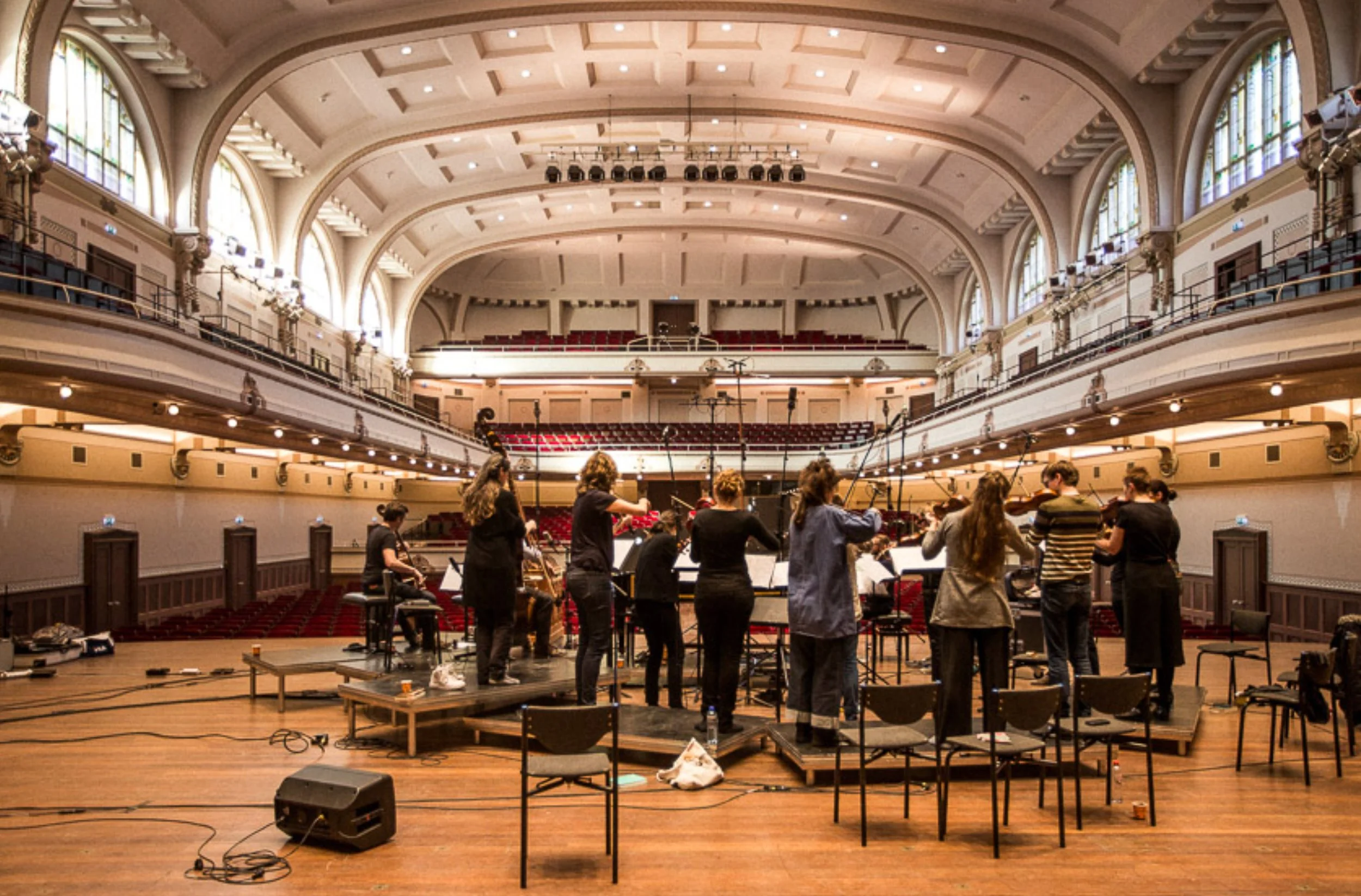
Leszek Możdżer & Holland Baroque photo by Wouter Jansen
In the context of energy healing, sound, especially nature's sounds, plays a vital role in the holistic approach to well-being. Energy healing sessions delivered through the Emotion, Body, or Belief Code have a stunning effect on the body's energy field. Still, when combined with clean water, unprocessed, nutrient-rich food, and nature, they can literally change lives in unimaginable ways.
Although, according to almost non-existent historical data regarding the above-mentioned 1939 London conference, the shift from the lower tuning frequency (432 Hz) to the modern standard (440 Hz) "was driven by practical needs for consistency in music performance, manufacturing, and broadcasting, rather than by any deliberate agenda," the truth may be more complicated. Changing the tuning may not have a dramatic effect on biology, but many musicians (such as Leszek Możdżer) choose 432 Hz for its relaxing, intuitive sound and the improved resonance it produces in instruments. If you want to hear the difference between 440 Hz and 432 Hz, here is a widely popular YouTube video (almost 6 million views).
There is more. Another frequency: 528 Hz, often called the love frequency. Here is a YouTube video comparing 432 Hz and 528 Hz. Whether we align with some of the thinking or not, the subtle changes in the surrounding frequencies have measurable effects on us.
I want to end this post with a quote from Gary Zukav's 1979 book, The Dancing Wu Li Masters. Many directives, agreements, standards, or recommendations claim high benefits for health and well-being, but on close examination, they do just the opposite. Is the 440 Hz standard one of them? You decide.
"With the awesome authority that we have given it, science is telling us that our faith has been misplaced. It appears that we have attempted the impossible, to disown our part in the universe. We have tried to do this by relinquishing our authority to the scientists. To the scientists, we gave the responsibility of probing the mysteries of creation, change and death. To us, we gave the everyday routine of mindless living.
The scientists readily assumed their task. We assumed ours, which was to play a role of impotence before the ever-increasing complexity of "modern science" and the ever-spreading specialization of modern technology.
Now, after three centuries, the scientists have returned with their discoveries. They are as perplexed as we are (those of them who have given thought to what is happening).
"We are not sure," they tell us," but we have accumulated evidence which indicates that the key to understanding the universe is you."