"Let's not forget that the little emotions are the great captains of our lives, and we obey them without realizing it." – Vincent van Gogh.
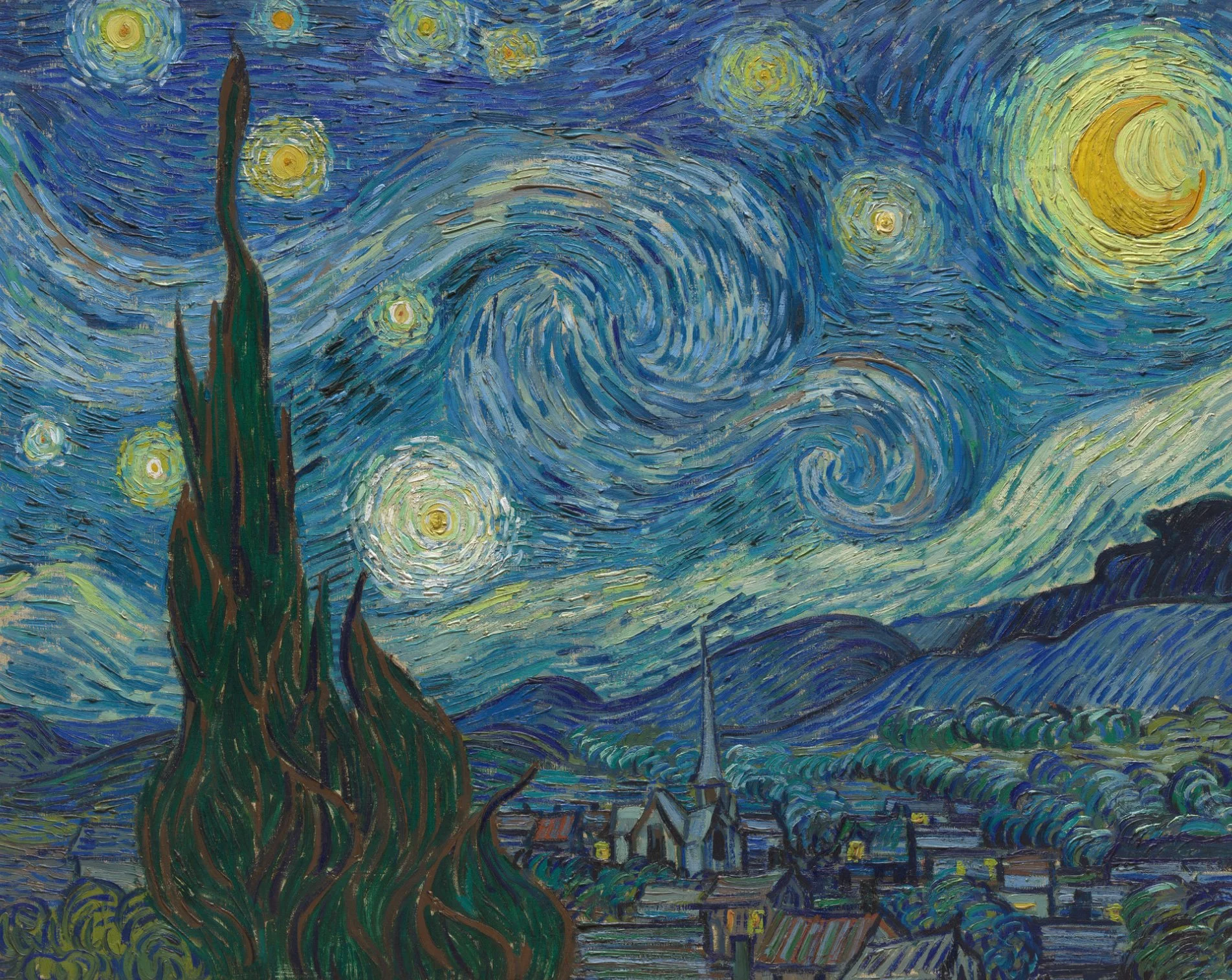
Vincent van Gogh. The Starry Night. Saint Rémy, June 1889
A couple of years ago, on Christmas Day, right after dinner, we heard people shouting next door. I thought the neighbour's guests were leaving after a wonderful celebration. However, things took a different turn when someone started banging on our front door. "The house next door is on fire," a young man shouted, "you have to leave right now!" We live on the far side of the island, and it takes a long time for the fire truck to get here. We've seen a few fires in the past, and they all ended badly. We were so lucky, the firefighters arrived in time to put it out.
What emotions run through you when you are about to leave behind all your possessions, memories, photos, and books (books are important), not knowing if you will see them again? Fear, anger, helplessness, shock, overwhelm. The body can't process all emotions at once. Some of them are left in the body—trapped, to use another expression—and, if not processed, they can cause a lot of damage.
But what is the role of an emotion? Why do we feel what we feel? They are signals for the body. Emotions are brain-body events, with a specific purpose. It is not just a random feeling that we experience. Through our senses (and also through memories, thoughts, and beliefs), the brain detects something. The amygdala, a brain gland, detects threats and their significance. The prefrontal cortex helps to interpret the situation, regulate impulses, and reframe thoughts. The hippocampus adds memory and context - similar events trigger similar feelings. It all takes a split second, and once an emotion is triggered, the autonomic nervous system changes the body's state: Sympathetic (Fight-or-Flight) or Parasympathetic (Rest-and-Digest). As a result, we may experience muscle tightening, rapid breathing, or a slow heart rate, which can lead to calming and relaxation.
"Fear of life is really the fear of emotions. It is not the facts that we fear but our feelings about them. Once we have mastery over our feelings, our fear of life diminishes."
~ David R. Hawkins
One important element to note in this process: the thoughts. Often, thoughts initiate the chain of reaction. They act as electrical signals in the brain, triggering the release of neurochemicals that signal the body to feel and experience matching emotions. It creates a feeling in the body, forming a feedback loop where more emotions reinforce more matching thoughts. That's why we can literally get sick by thinking. Similarly, we can reverse the process and become healthy with our thoughts. Becoming Supernatural is a wonderful book by Dr. Joe Dispenza that describes this process in detail. Or, When Body Says No, by Dr. Gabor Maté - another highly recommended book.
I'm sorry, it was a slight detour, so let's go back to our brain-body movement where we've left the scene.
There are still more actions to note. The brain signals hormone release—see the detour above—especially during strong, sustained emotions. We may see a spike in cortisol and adrenaline levels. People tend to feel emotions in specific areas of the body. For instance, fear and anger may be felt in the chest and upper body. Sandness and grief often manifest in the throat - a lump and heaviness, while shame could be felt in the chest and face. Freely felt and expressed emotions are harmless; they run their course and do not cause any problems. But unprocessed and chronic emotions lead to negative outcomes. They become trapped.
Let's not forget that it is all towards protection. It is for our benefit, even though it often feels quite the opposite. The role of the subconscious mind is to keep us safe, not happy.
The Emotion Code Chart - discoverhealing.com
Here is an example. You encounter a situation, and suddenly you feel anger. Obviously, you want to avoid this situation, and feeling angry can provide temporary relief for the body. Next time, when a similar situation arises, anger will surface much more quickly. The body knows how to deal with it. In time, a pattern is recognized, and the brain builds neural pathways to speed up the process. Emotions settle the body or system towards safety, even if it doesn't feel great. With repetition, it becomes a belief - “Oh, I am so easy to trigger. I'm angry all the time. It's just who I am.”
There is more to it. Sometimes, it is easier to feel, for instance, nervousness. It is a Surface Emotion that protects and hides what is truly going on. It could be shame or guilt - avoided and uncomfortable emotions. We call them Deep Emotions. Again, this pattern, or protection, influences the shift of the baseline, on which the natural body cycle operates. From the subconscious perspective, it is not ideal, but it works and keeps the body safe. Luckily, we have tools to uncover Trapped Emotions and release them through the Emotion Code, Body Code or Belief Code. Even looking at the Emotion Chart helps with emotion literacy. Next time you feel anger, you may ask: "Okay, I feel anger; the emotion is connected to my liver and gallbladder. That's why I feel this anger bubbling deep inside me. Perhaps this anger covers something else that I feel deeper in my body. Is this my low self-esteem that I am trying to avoid?" This simple act of recognition helps to process trapped emotions.
There are other ways to do it. Look for books by Dr. David R. Hawkins—consciousness researcher and spiritual teacher—especially Letting Go and Power vs. Force. And if you want to experience the process, book a session with me and start releasing your emotional baggage. The feeling is truthfully liberating.