Energy flows where attention goes
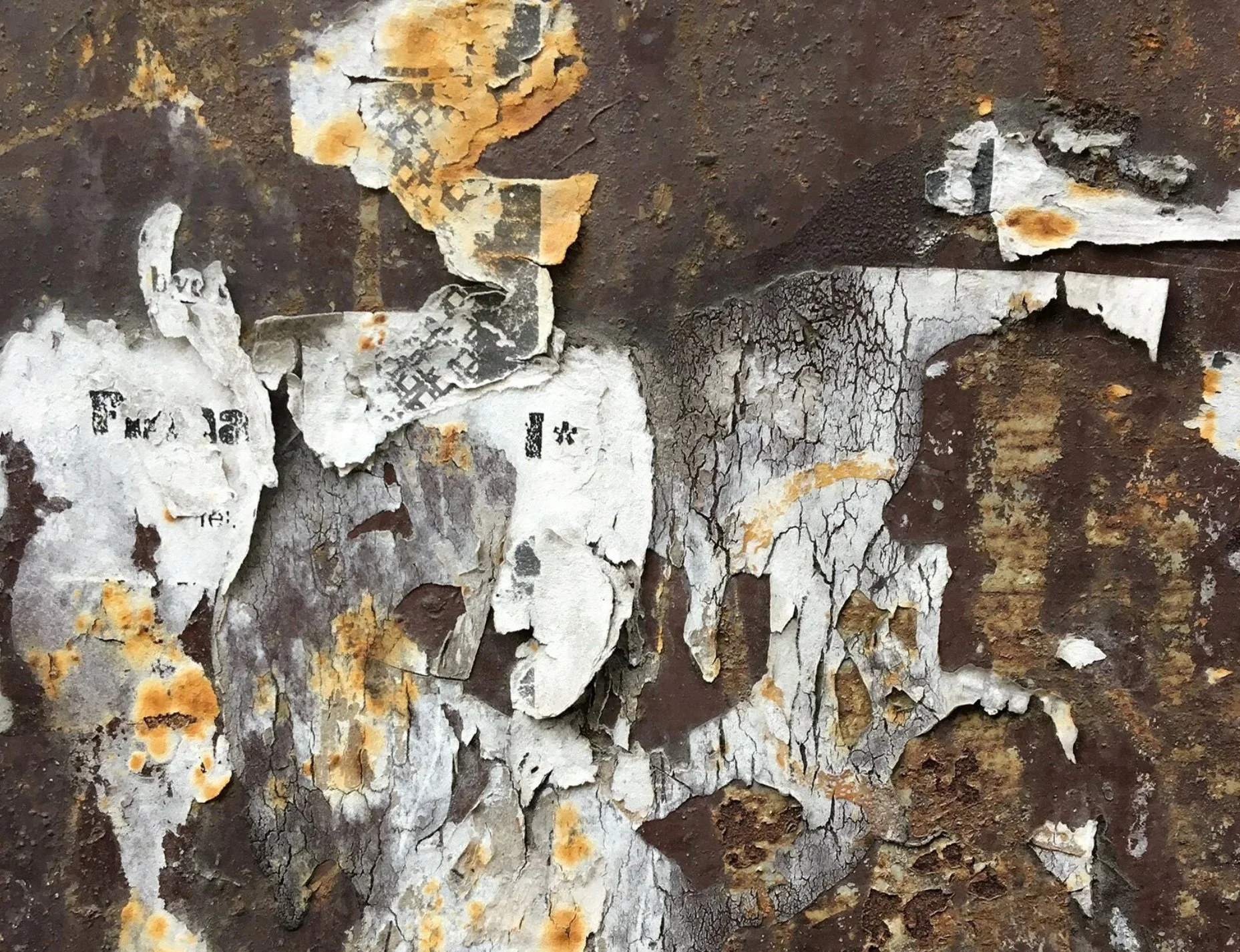
For some time now, I've been taking photographs of abstract surfaces covered with graffiti, ripped posters or other obscure pieces of the urban landscape - I took this one in Warsaw, Poland, in the summer of 2018 - a ready-made art. More images can be found in this post: Do not fear what awaits around the corner.
On the cold evening of April 10, 1917, thousands gathered in front of the Grand Central Palace in New York City to participate in opening the largest ever art exhibition held in the city, prepared by The Society of Independent Artists. Marcel Duchamp was the only European artist listed in the exhibition's catalogue. According to the rules, for a one-dollar fee plus annual five-dollar membership dues, anyone could submit two pieces of art. The exhibition's governing principle was to create artistic freedom, and indeed, some 2,500 works of art awaited the public. One of the pieces submitted by Duchamp was titled Fountain.
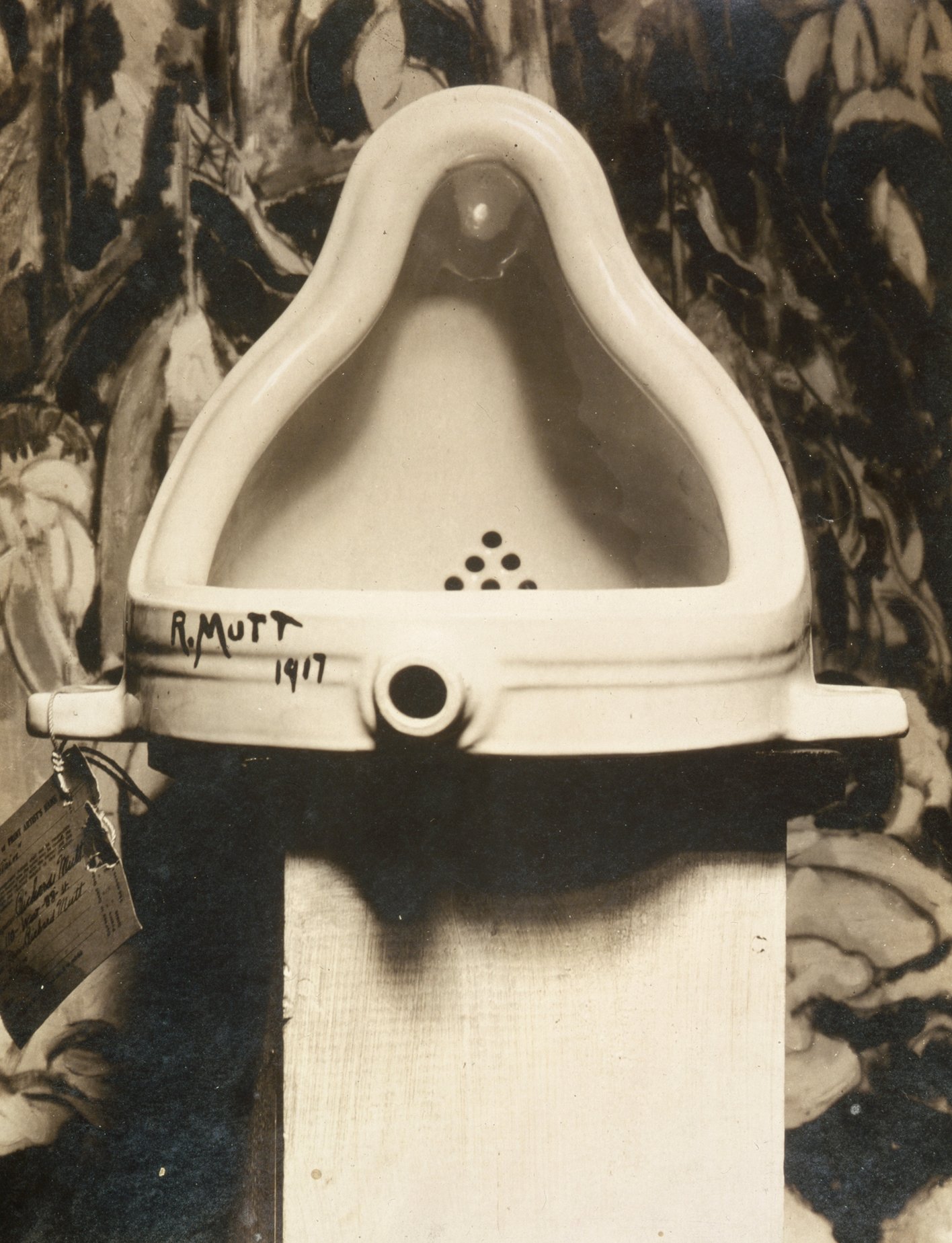
Marcel Duchamp Fountain, 1917, photograph by Alfred Stieglitz at 291 art gallery following the 1917 Society of Independent Artists exhibit, with entry tag visible.
Some say the idea for this piece came to life when Duchamp visited a store on Fifth Avenue, accompanied by Joseph Stella and Walter Arensberg. There, he purchased a standard Bedfordshire urinal. After being signed R. Mutt 1917 and placed vertically, this very urinal was submitted by Duchamp to the show. Since the society could not reject any entry, Fountain was accepted only after much discussion, just in time to be placed behind a partition so nobody could see it. Some say it was not Duchamp's idea, but rather that of one of his female friends, who used the pseudonym Richard Mutt, and sent the urinal to the show. There is not much evidence, and soon after the show, the original was lost. There is only one photograph of the original piece by Alfred Stieglitz.
"Art is not about itself but the attention we bring to it."
~ Marcel Duchamp
Duchamp and his readymades were rediscovered in the 1950s, and Duchamp's Fountain became one of the cultural icons of modern art - the context changed everything. Placing a plumbing fixture on a pedestal in an art gallery created a new way of looking at it. It was not about the artist who crafted the art - it was the action of choosing something that changes its original purpose or context. Many years ago, at art school, we played an exercise in which one would select a possible artwork from random paint splashes using a small paper window. Once framed, those uninspiring colour messes would look quite fancy. Again, framing and granting a different status created a different experience.
"Since a three-dimensional object casts a two-dimensional shadow, we should be able to imagine the unknown four-dimensional object whose shadow we are. I, for my part, am fascinated by the search for a one-dimensional object that casts no shadow at all."
~ Marcel Duchamp
There is another way of looking at this: energy flows where attention goes. Our thoughts, ideas, and concepts contain energy. Thought is an energy form. Humans are unique in the ability to create something out of nothing - we have imagination. Now, for an idea to materialize, it needs to exist in what some call a field of unlimited possibilities. It is not very different from what quantum physics calls the wave function. Until something is observed, it remains in a wave form, a possibility. Once observed, it collapses into a particle or reality. Assuming the above is true, we indeed create our own reality. Duchamp is a perfect example of how a single idea, whether planned or spontaneous, changed the way artists think about the creative process. Interestingly, on the Emotion Code Chart, column B, row 5 (generated by the kidneys or bladder), we find Creative Insecurity - emotion, which Dr. Nelson said he loves to release, as it changes so many possibilities: creativity is not limited to an art form. It can be a new work, a new home, moving to a new city, or starting a new relationship. And the opposite of Creative Insecurity is Imagination—a positive emotion. When we release a trapped negative emotion, we can initiate a process called transmutation in Hermetic texts. Holding an intention, we can change the degree, so Creative Insecurity transmutes to Imagination.
"Our thoughts, feelings, processes, and unconscious beliefs have an energy that is hidden in the work. This unseen, unmeasurable force gives each piece its magnetism. A completed project is only made up of our intention and our experiments around it. Remove intention and all that's left is the ornamental shell."
~ Rick Rubin
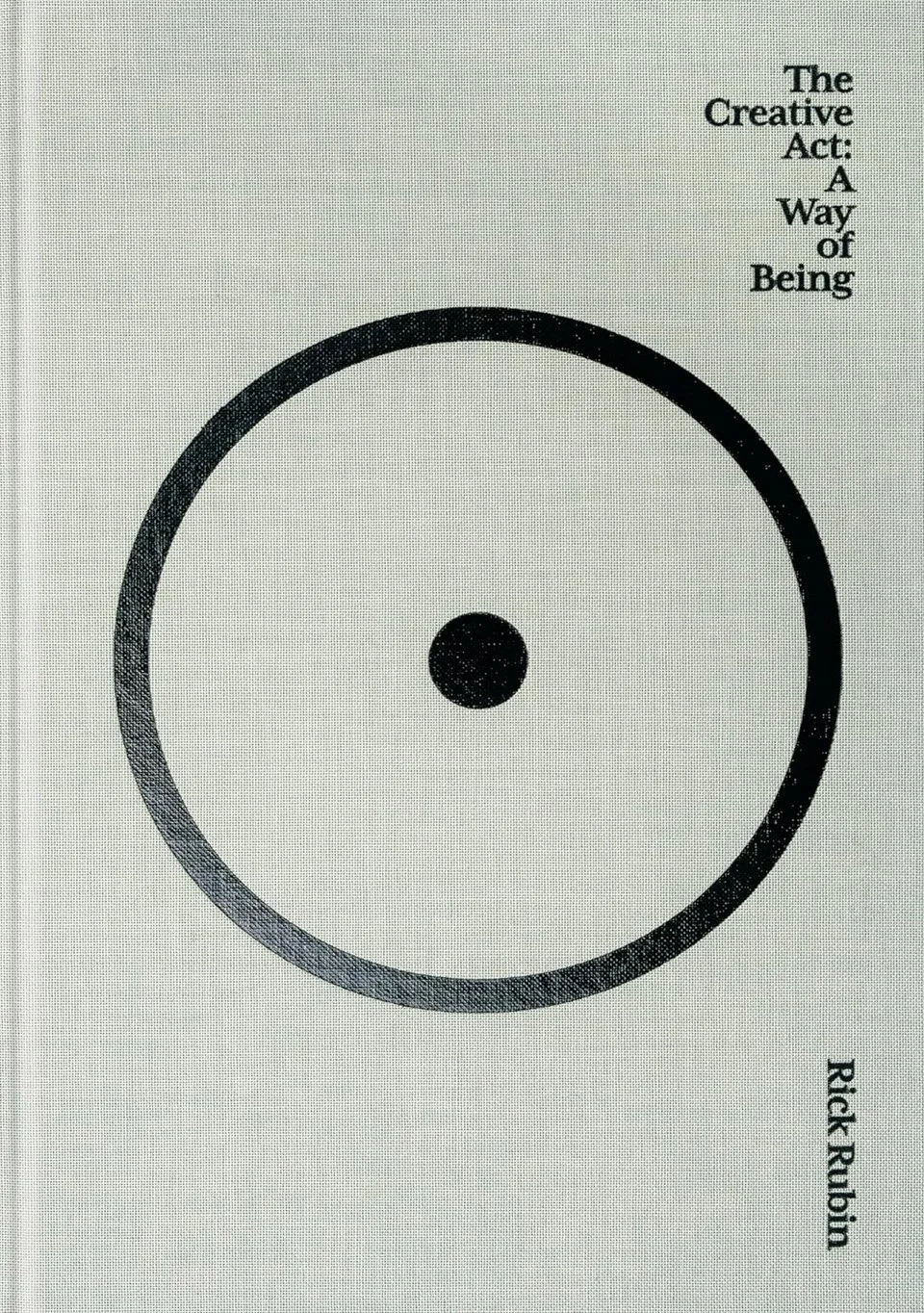
The above quote comes from The Creative Act: The Way of Being by Rick Rubin. Following the author's advice, I randomly opened the book and found the paragraph mentioned above. He said that often, a line from a book would contain a message relevant to a piece of work occupying the mind. With his book, any sentence will ring some truth with anyone - in other words, in every human being, because creativity doesn't apply only to so-called artistic endeavours. I agree with Rubin all the way. I always thought the design profession was similar to a plumber, carpenter or car mechanic - a confirmation from him put a smile on my face. We all create, which is the true nature of every human being. I read a few more pages from Rubin's book, and this is what awaited me a few pages from the opening paragraph.
"Beware of the assumption that the way you work is the best way simply because it's the way you've done it before."
~ Rick Rubin
Rick Rubin is a record producer who won eight Grammy Awards, including 2007 and 2012 Album of the Year with the Dixie Chicks and Adele. Reading The Creative Act is an experience in itself, and I will return to it repeatedly, but there are a few pretty good podcasts that expand on the book's themes. One is Rubin's conversation with Malcolm Gladwell, the author of five New York Times bestsellers, presented by Broken Record. Another one is a ninety-minute conversation with Rich Roll.